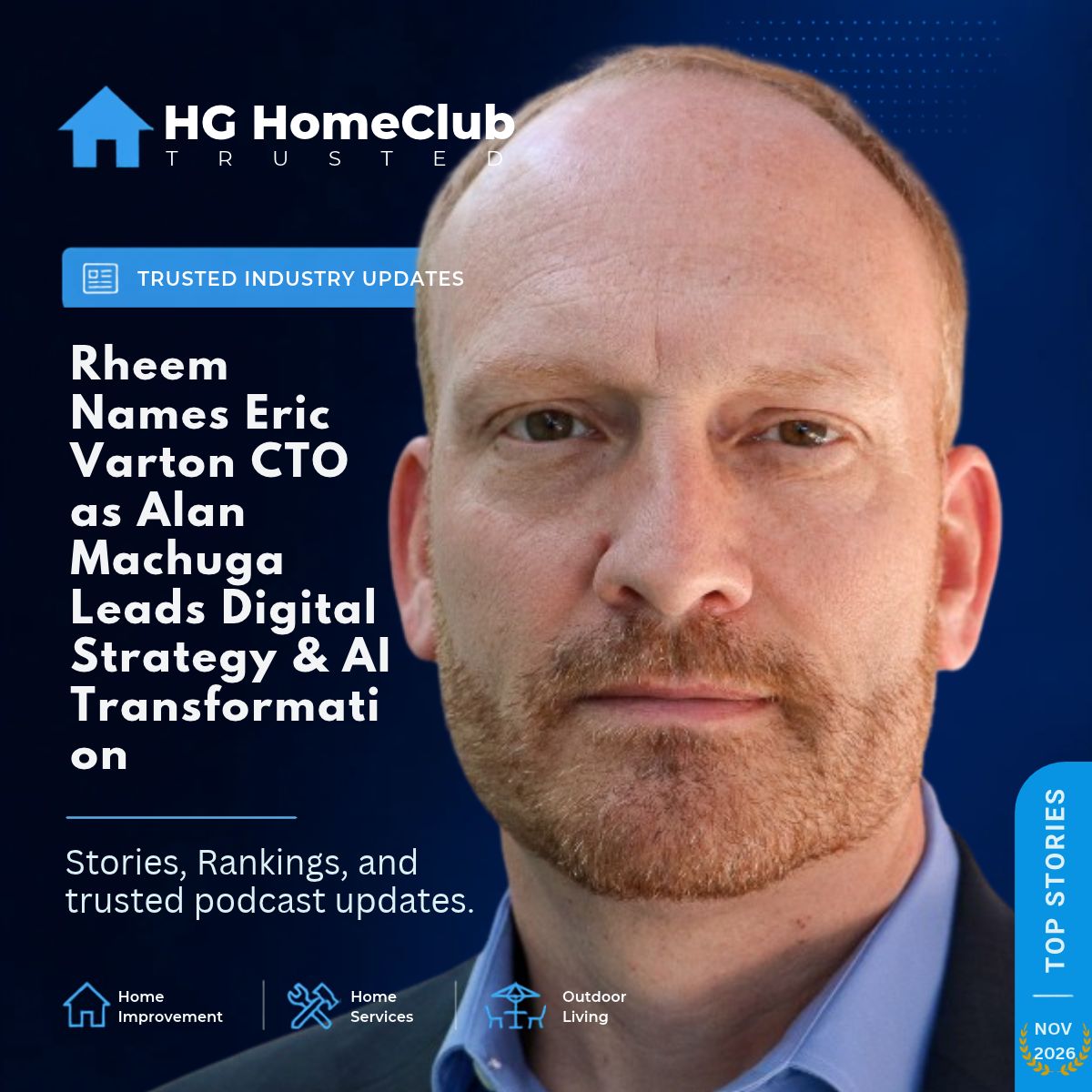
Executive reshuffles usually get a shrug from anyone outside the boardroom, but this one is worth a second look. Rheem Manufacturing just split what used to be a single technology leadership job into two distinct executive seats, and the way they split it says a lot about where the HVAC and water heating business thinks its next decade of value is going to come from.
What Actually Changed
According to ACHR NEWS, Rheem hired Eric Varton as senior vice president of research and development and chief technology officer, putting him in charge of global R&D, controls engineering, and the company’s Program Management Office. Meanwhile Alan Machuga, who previously held the CTO title himself, is moving into a newly created role as executive vice president of digital strategy and AI transformation, where he will own enterprise digital strategy and the rollout of AI capabilities across the business.
In plain terms: one executive now owns the physical engineering of equipment, and the other owns the software, data, and AI layer that increasingly sits on top of it. Rheem’s CEO Chris Peel framed it as two connected but distinct tracks, one driving engineering collaboration and product innovation, the other unlocking new digital capabilities for customers and the business.
Why This Matters Beyond Rheem’s Org Chart
Contractors and homeowners rarely think about who holds which VP title at a manufacturer, and fair enough, that is not their job. But decisions like this ripple downstream fast. When a major manufacturer decides AI and digital strategy deserve their own standalone executive instead of being bolted onto a traditional engineering role, it is a signal that the company expects connected equipment, predictive diagnostics, smarter installer tools, and data-driven customer platforms to become core product features, not side projects.
Varton brings three decades of product development experience, including time at Ford and at Yazaki North America, plus the detail that he once owned and operated an HVAC business himself. That is a useful credential for a role focused on engineering consistency and product innovation, because it means someone who has actually run field operations will be shaping how equipment gets built and supported.
Machuga, for his part, is not new to this. He has already been steering Rheem’s digital transformation, building out customer platforms, data infrastructure, cloud systems, and cybersecurity. Giving him a dedicated, elevated title to keep pushing AI adoption suggests Rheem sees this as a multi-year bet rather than a short-term initiative.

The Takeaway for the Trade
For HVAC contractors, distributors, and homeowners, the practical upshot is this: expect Rheem’s roadmap to lean harder into smart diagnostics, app-connected systems, and AI-assisted service tools over the next several product cycles. Dedicated leadership for digital strategy tends to accelerate that kind of rollout rather than slow it down. It also puts pressure on competing manufacturers to make similar structural moves, because once one major player splits engineering from digital strategy at the executive level, the rest of the industry tends to notice.
None of this guarantees smoother installs or fewer callbacks tomorrow. But leadership structure is often the clearest early tell for where a manufacturer’s R&D dollars are headed, and this one points squarely at AI and connected product experiences as the next battleground.
Frequently Asked Questions
1. What leadership changes did Rheem announce?
Rheem split its top technology role into two positions: Eric Varton joins as SVP of research and development and CTO, while Alan Machuga moves into a new role as EVP of digital strategy and AI transformation.
2. Who is Eric Varton?
Varton is a technology and engineering leader with more than 30 years of experience, most recently leading engineering strategy at Yazaki North America, with earlier stints at Ford Motor Co. and his own HVAC business.
3. What will Varton oversee at Rheem?
He will lead global research and development, controls engineering, and the Program Management Office, focusing on consistency across engineering and product development processes.
4. What is Alan Machuga’s new role?
Machuga transitions from executive vice president of technology and CTO to executive vice president of digital strategy and AI transformation, leading enterprise digital strategy and AI adoption.
5. Why is Rheem splitting the CTO role in two?
The company says the move creates dedicated executive leadership for both engineering innovation and accelerating AI and digital capabilities, which it considers increasingly critical to its business strategy.
6. What has Machuga already accomplished at Rheem?
He has led Rheem’s digital transformation efforts, building a stronger technology foundation across customer platforms, data, cloud infrastructure, cybersecurity, and operations.
7. How does this affect HVAC contractors?
Contractors should expect Rheem to push harder into connected equipment, predictive diagnostics, and AI-assisted service tools as digital strategy gets dedicated executive focus.
8. Does this change affect Rheem’s current products?
The announcement does not detail immediate product changes, but it signals where future R&D investment and digital feature development are likely headed.
9. When did Rheem announce these leadership moves?
The announcement was reported on October 9, 2026, out of Rheem’s headquarters coverage area in Atlanta.