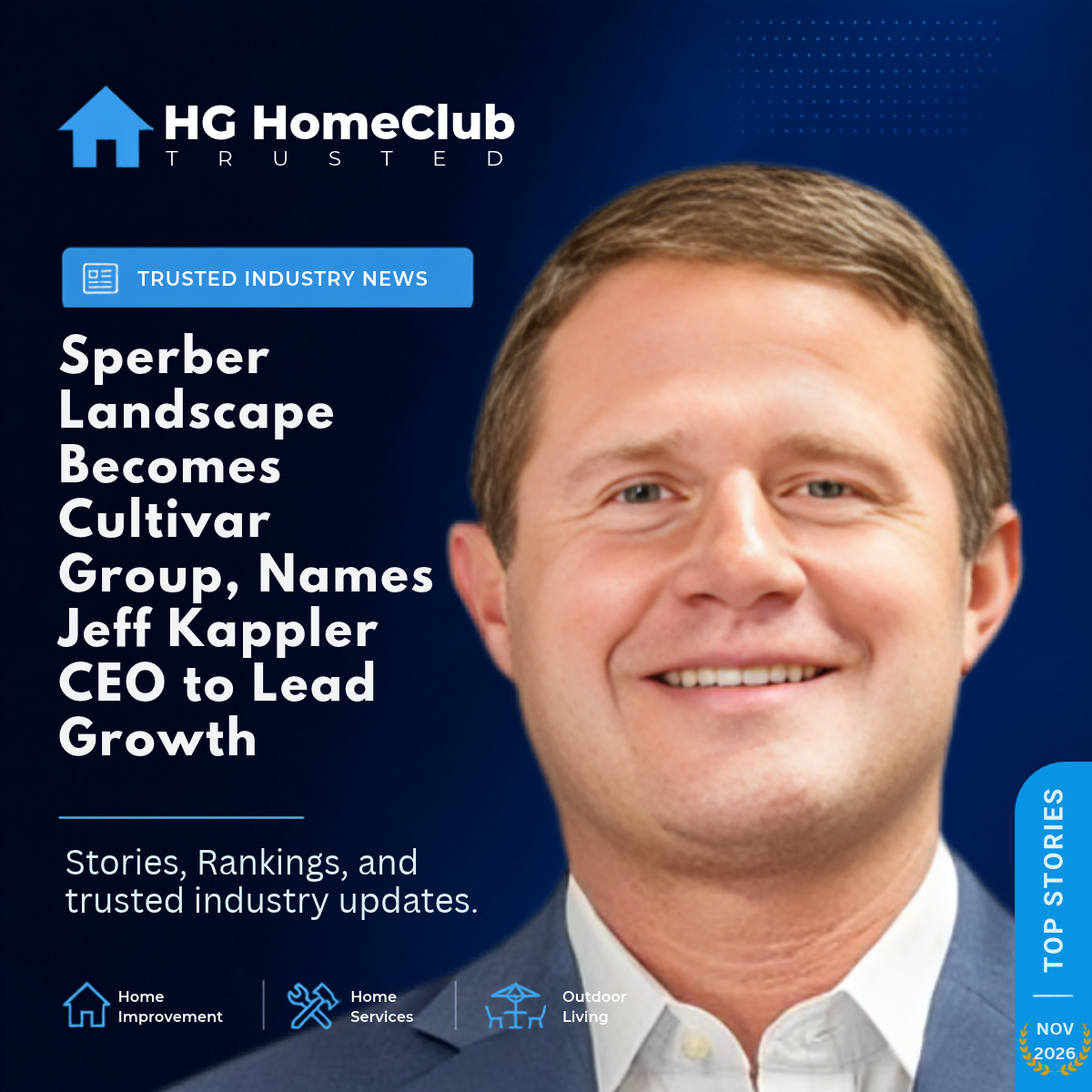
Rebrands in the landscaping world usually mean one of two things: a company is covering for trouble, or a company has gotten too big for its old name to make sense anymore. This one is the second kind. Sperber Landscape Companies, a commercial landscape roll-up platform, has renamed itself Cultivar Group, brought in a CEO from outside the industry, and closed a refinancing deal. That is a lot of change to announce in one breath, and it tells you where private-equity-backed services platforms are headed next.
According to reporting from Landscape Management, the newly christened Cultivar Group now sits over 17 partner companies, each keeping its local name and reputation while tapping into shared resources like training, safety programs, technology and equipment. Jeff Kappler steps in as CEO after a career built mostly outside landscaping, including 15 years at Danaher and a stint running National Underground Group. Nexus Capital Management stays on as lead shareholder, and the company just completed a refinancing led by J.P. Morgan and MUFG, with Axos Bank also participating.
Why the Name Change Actually Means Something
A lot of rebrands are cosmetic. This one is not, and the name itself is the tell. In horticulture, a cultivar is a plant variety bred deliberately for specific traits. That is not an accident of marketing copy. It is the company telling the market, directly, that this platform was built through selection and cultivation of specific partner companies chosen for particular strengths, not just bolted together for scale.
For contractors watching the commercial landscape roll-up space, that distinction matters. Plenty of platforms buy companies and flatten them into a single brand, stripping out the local reputation that made the acquisition valuable in the first place. Cultivar Group is explicitly doing the opposite: local identities stay intact, and the national layer exists to support, not replace, what already works on the ground. That is the pitch anyway, and it is worth watching whether it holds as the company keeps growing.
An Outsider CEO Is the Bigger Signal
Bringing in Kappler, whose background is industrial and infrastructure services rather than lawns and shrubs, says something about what Cultivar Group thinks it needs next. Companies at this stage of a roll-up typically stop needing someone who knows turf and start needing someone who knows how to run a multi-site services business at scale: standardizing operations, integrating finance systems, managing acquisition pipelines, and keeping dozens of local general managers aligned without killing their autonomy. Kappler’s Marine Corps background and two decades in industrial services fit that profile closely.
The addition of Mark Baranczyk as chief revenue officer backs up the same read. A CRO focused on expanding opportunities across partner companies while protecting local client relationships is exactly the hire you make when you are trying to cross-sell and grow organically across a federated structure without alienating the people who built those client relationships in the first place.
The Refinancing Tells the Real Story
Name changes and executive hires generate headlines, but the refinancing led by J.P. Morgan and MUFG is the part that actually funds what comes next. Fresh capital flexibility typically means one thing in this sector: more acquisitions are coming. Commercial landscaping remains a fragmented industry full of strong regional operators who do not have succession plans, and platforms like Cultivar Group are precisely the buyers positioned to absorb them.
For independent landscape contractors, that is the real takeaway here. Consolidation in commercial landscaping is not slowing down, and well-capitalized platforms with fresh leadership and fresh financing are going to keep knocking on doors. Whether that is a threat or an opportunity depends entirely on where you sit. For owners thinking about an exit, a platform that promises to preserve local branding and leadership is a meaningfully different conversation than one that erases your name on day one.
Frequently Asked Questions
What company rebranded to Cultivar Group?
Sperber Landscape Companies, a commercial landscape services provider operating across the United States, rebranded to Cultivar Group.
Who is the new CEO of Cultivar Group?
Jeff Kappler was named CEO. He brings more than 20 years of leadership experience in industrial, infrastructure and service businesses, including 15 years at Danaher Corp. and a role as CEO of National Underground Group.
Why did the company change its name from Sperber to Cultivar Group?
The company said the new name reflects its increased scale, geographic reach and capabilities since its founding, while its commitment to customers, employees and culture stays the same.
What does “cultivar” mean and why was it chosen?
In horticulture, a cultivar is a plant variety developed through selection for specific characteristics, a nod to how the company has deliberately assembled its partner companies.
How many partner companies make up Cultivar Group?
Cultivar Group brings together 17 partner companies that retain their local identities and reputations while drawing on shared national resources.
Who else joined the leadership team besides Kappler?
Mark Baranczyk joined as chief revenue officer, bringing experience in marketing, sales and business development, with a focus on expanding opportunities across partner companies while preserving local client relationships.
Did Cultivar Group complete any financial transactions recently?
Yes. Earlier this year, the company completed a refinancing led by J.P. Morgan and MUFG, with participation from Axos Bank, intended to support organic growth, acquisitions and investments in people and systems.
Who is the lead shareholder of Cultivar Group?
Nexus Capital Management remains the company’s lead shareholder.
What does this rebrand signal for the commercial landscaping industry?
It signals continued consolidation in a fragmented industry, with well-capitalized platforms positioned to pursue acquisitions while promising to preserve the local branding and leadership of the companies they acquire.