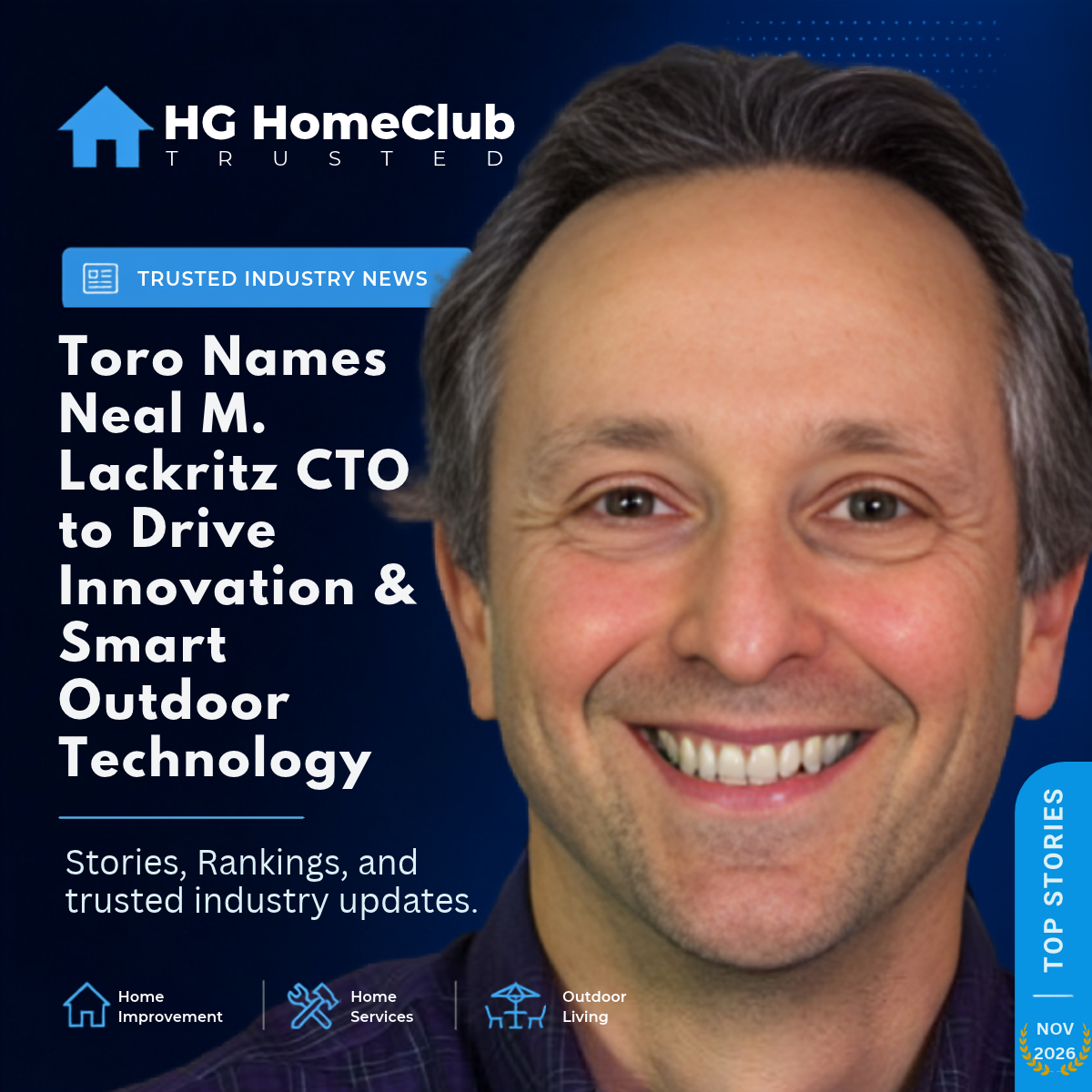
When a 100-plus-year-old equipment manufacturer creates a brand-new C-suite seat, pay attention. The Toro Company just named Neal M. Lackritz as its first vice president and chief technology officer, effective November 2, and the hire tells you exactly where the company thinks the next decade of lawn and landscape equipment is headed: autonomous, electrified, and connected.
As Lawn & Landscape reported, this isn’t a lateral reshuffle. It’s a newly created role built specifically to oversee Toro’s global engineering organization and its Center for Technology, Research and Innovation, with a mandate to accelerate and commercialize autonomous and alt-power solutions. Translation: Toro wants someone whose entire job is making sure the robot mowers and battery platforms stop being R&D projects and start being shelf product, faster than the competition can match.
Why This Hire, Why Now
Lackritz isn’t a lawn-and-garden lifer, and that’s the point. He spent 30-plus years across automotive, robotics, outdoor equipment, and consumer hardware, most recently as vice president of engineering at Whisker. Before that he held senior roles at Ariens, Genesis Motion Solutions, Apple, and Bose. That’s a resume built around taking complicated embedded systems and autonomous controls and turning them into reliable, manufacturable consumer products.
Toro’s president and COO Edric C. Funk framed the hire as a continuation of the company’s engineering heritage, but the subtext is competitive urgency. Robotic mowers, battery-electric commercial equipment, and connected fleet management aren’t niche categories anymore. They’re becoming the baseline expectation from landscape contractors who are tired of gas engines, noise ordinances, and labor shortages. Every major outdoor power equipment brand is racing to own that transition, and Toro just put a dedicated executive in charge of winning that race instead of leaving it scattered across product teams.

What It Means for Contractors and Dealers on the Ground
If you’re running a landscape crew or a dealership floor, an org chart hire at a manufacturer might feel like background noise. It isn’t. A dedicated CTO role with authority over the entire engineering organization usually means faster product cycles, fewer siloed decisions between the autonomous team and the traditional equipment team, and a clearer roadmap for which platforms get investment. For contractors evaluating whether to bet capital on robotic zero-turns or electrified commercial units, that kind of internal clarity at the manufacturer level eventually shows up as more stable product lines and better long-term parts and software support.
It also signals where Toro expects margin and differentiation to come from going forward. Connected solutions, meaning telematics, fleet data, and software layered onto hardware, are becoming as important to commercial buyers as horsepower and deck width used to be. A CTO with Lackritz’s background in embedded controls and connected systems is a strong hint that Toro plans to compete on software and data just as hard as it competes on steel.
Funk called Lackritz’s leadership style the kind that “builds alignment across organizations” to accelerate innovation and create value for customers and shareholders. That’s corporate language for: stop the internal turf wars between the innovation lab and the production floor.
None of this guarantees a specific product announcement tomorrow. But when an established manufacturer creates a C-suite technology role from scratch and fills it with an outside robotics and electrification specialist, it’s a strong signal of where R&D dollars are about to flow. Dealers, distributors, and landscape business owners planning equipment purchases over the next two to three years should watch Toro’s autonomous and electric lineup closely heading into 2026.
FAQ
1. Who did Toro just hire as chief technology officer?
The Toro Company named Neal M. Lackritz as vice president and chief technology officer, effective November 2.
2. Is this a newly created position?
Yes. The chief technology officer role did not previously exist at Toro; it was created specifically for this hire.
3. What will Lackritz be responsible for?
He will lead enterprise technology strategy, oversee the global engineering organization, and run the Center for Technology, Research and Innovation, with a focus on autonomous, alternative power, and connected solutions.
4. Where did Lackritz work before joining Toro?
He joins from Whisker, where he was vice president of engineering. Earlier roles include Ariens Corporation, Genesis Motion Solutions, Apple, and Bose.
5. What kind of experience does he bring to the role?
More than 30 years of technology leadership across automotive, robotics, outdoor equipment, and consumer hardware, with expertise in autonomous systems, electrification, connected solutions, and embedded controls.
6. What is Lackritz’s educational background?
He holds a bachelor’s degree in electrical engineering and computer science and a master’s degree in electrical engineering from MIT, and he was also a doctoral student there.
7. Why did Toro create this role now?
Toro says it wants to accelerate innovation and commercialize autonomous, alternative power, and connected technologies while strengthening its market leadership and efficiency for customers.
8. Who does Lackritz report to or work alongside?
Toro president and chief operating officer Edric C. Funk welcomed Lackritz to the leadership team and spoke to his collaborative leadership approach.
9. What should contractors and dealers take away from this hire?
It signals Toro is prioritizing faster development of robotic mowers, electrified equipment, and connected fleet solutions, which should influence future product roadmaps and purchasing decisions.