The chair, president and chief executive officer of The Home Depot is recognized for reshaping what a home improvement retailer means to the professional trades, for a philanthropic engine that has crossed a billion dollars in giving, and for a leadership style that sends the corner office back onto the sales floor every quarter.
HG HomeClub has named Ted Decker, chair, president and chief executive officer of The Home Depot, to its list of the 25 Most Influential Leaders in Home Improvement, Home Services and Outdoor Living.
The list, published by HG HomeClub, recognizes 25 leaders who are shaping these three industries in the right way. It spans manufacturing, distribution, retail, technology, franchising, contracting, media, capital and the associations that convene the trades. It is presented alphabetically and carries no numerical ranking, because the leaders on it exercise influence in fundamentally different ways, and comparing a keynote stage to a distribution network, or a franchise system to a product platform, would flatten what makes each of them consequential.
Ted Decker earns his place on it for a simple reason: no other individual sits at the center of as much home improvement activity. The Home Depot is the largest home improvement retailer in the world, with more than 2,360 stores, over 470,000 associates, and operations across all 50 states, the District of Columbia, Puerto Rico, the U.S. Virgin Islands, Guam, 10 Canadian provinces and Mexico. Fiscal 2025 sales reached $164.7 billion, and the first half of fiscal 2026 ran 5.3 percent ahead of the prior year at $89.6 billion, including a second quarter of $47.9 billion.
Those are the numbers. The influence is in what Decker has done with them.
How Did Ted Decker Go From a Valuation Desk in Atlanta to the Chair’s Seat at The Home Depot?
Ted Decker did not arrive at The Home Depot as a chief executive. He arrived in 2000 as director of business valuation, and then spent more than two decades moving through the business one discipline at a time.
Before The Home Depot, he held corporate finance, lending and credit positions at PNC Bank, then worked in business development, strategic planning and finance at Kimberly-Clark Corp. and Scott Paper Co., with postings that took him to England and Australia. He holds a bachelor’s degree in English from The College of William & Mary and a master’s degree in business administration from the Tepper School of Business at Carnegie Mellon University.
Inside The Home Depot, his progression reads like a tour of the company’s nervous system: senior director of business valuation, vice president, senior vice president of strategic business development, senior vice president of retail finance. In 2014 he was elevated to executive vice president of merchandising, serving as chief merchant for more than six years with responsibility for store and online merchandising, merchandising strategy, marketing, vendor management and the in-store environment. In 2020 he became president and chief operating officer, taking on global store operations, global sourcing, global supply chain, outside sales and service, real estate, merchandising, marketing and online strategy.
He was named chief executive officer in 2022 and elected chair of the board effective Oct. 1, 2022, succeeding Craig Menear.
That sequence matters to the industry, because it explains the character of his leadership. A chief executive who has personally owned merchandising, supply chain, finance and store operations does not treat the professional contractor as a market segment to be addressed with a marketing campaign. He treats it as an operating problem, inventory, credit, delivery windows, order management, jobsite logistics and solves it with capital.
Why Did Ted Decker Put Roughly $24 Billion Behind the Professional Contractor?
The defining strategic move of Decker‘s tenure is the decision to stop thinking of The Home Depot as a retailer that also sells to contractors, and to start building it as a supplier that contractors can run a business on.
In 2024, the company acquired SRS Distribution for a total enterprise value of approximately $18.25 billion, the largest acquisition in company history. SRS Distribution is a residential specialty trade distributor across roofing, landscaping and pool verticals, and it came with something no retail footprint could replicate: branch-level relationships with roofers, landscapers and pool professionals, a fleet built for jobsite delivery, and a management team that had grown the business from a start-up into a national platform under Dan Tinker, who continues to lead it as president and chief executive officer within The Home Depot.
In 2025, SRS Distribution completed the acquisition of GMS Inc. for a total enterprise value of approximately $5.5 billion, adding one of North America’s leading distributors of specialty building products, drywall, ceilings and steel framing, to the platform.
Taken together, those two transactions changed the shape of the industry. The Home Depot now describes an addressable market of roughly $1.2 trillion, with the professional customer opportunity alone at approximately $700 billion. The Pro ecosystem that serves it comprises more than 2,360 stores, 1,300 branches, 325 customer-facing warehouses and approximately 16,000 delivery assets. Professional customers already account for more than $90 billion of annual sales.
For a residential contractor, that is not an abstraction. It is the difference between sourcing a complex job from four suppliers and sourcing it from one, with trade credit, a dedicated sales representative, order management, and delivery to the jobsite rather than the aisle.
“Pros run their business from the truck, the jobsite and our aisles, not a desk,” said Michael Rowe, executive vice president of Pro for The Home Depot, when the company expanded its Pro digital experience in 2026. “Our upgraded Pro site experience provides tools that work the way Pros do, by integrating project management into their mobile workspace to help them oversee entire jobs, not just individual purchases. And the best part is that all of these tools are available through one supplier.”
That is the strategy Decker authorized, funded, and organized the company around, and the reason distributors, manufacturers, and contractors across home improvement now plan against it.
“Frictionless Interconnected Experience” on a Jobsite
The second pillar of Decker‘s influence is less visible from the parking lot but just as consequential: he has spent his tenure dissolving the line between the store, the website and the truck.
Under his leadership, The Home Depot has pushed artificial intelligence into inventory visibility, deployed mobile tools for associates and professional customers, and knit fulfillment networks together so that a project can begin on a phone and end on a jobsite without the customer managing the seams.
In July 2026, he restructured the company’s senior leadership to accelerate exactly that. Merchandising, interconnected retail, Pro acceleration and technology were consolidated under a smaller set of executive vice presidents, Billy Bastek leading core merchandising, Jordan Broggi leading a unified interconnected organization spanning customer experience, online, financial services and loyalty, Richard McPhail leading an Office of Pro Acceleration, and Fran Bell leading a unified technology organization covering artificial intelligence, data science, product management and user experience.
“To capture greater share of this enormous opportunity, our focus is clear: drive our core and culture, deliver a frictionless interconnected experience and win the Pro,” Decker said in announcing the realignment. “We are aligning our organization to further support this strategy, enable smarter, faster innovation and create a more seamless customer experience for DIY and Pro customers.”
Those three phrases, core and culture, frictionless interconnected experience, win the Pro, have become shorthand across the industry for where home improvement retail is heading.
How the Country’s Largest Garden Center Set the Pace of the Entire Outdoor Living Season
Decker‘s influence on outdoor living is often underestimated because it is distributed across so many aisles at once.
The Home Depot is the country’s largest seller of lawn and garden goods, and its garden centers set the seasonal rhythm of the residential landscape business, determining when live goods, mulch, hardscape, irrigation, mowers, grills and patio furniture reach homeowners, at what price and in what volume. Suppliers plan production cycles around it, and the company’s annual Innovation Awards have become a meaningful signal for outdoor products entering the market.
On the professional side, the SRS Distribution acquisition brought landscape and pool distribution directly into the enterprise, putting The Home Depot into branch-level competition for the same landscape and pool contractors served by specialists such as SiteOne Landscape Supply. Outdoor living, in other words, is no longer a seasonal department inside the company. It is a distribution business with its own branches, trucks and trade relationships.
Why Does Ted Decker Send Every Executive Back Onto the Sales Floor Each Quarter?
If the strategy explains Decker‘s commercial influence, the culture explains why so many operators across home services cite him.
In 2024 he instituted a frontline connectivity policy requiring corporate associates, including senior leadership and remote employees, to work a full eight-hour retail shift in a store once every quarter. Not a store visit. A shift: an apron, a register or an aisle, and customers.
The policy drew national attention because it inverted a hierarchy most large companies only talk about inverting. For an industry where the people closest to the customer are almost always the furthest from the decision, it landed as a genuine statement of values, and it has since been cited as a model by leaders far outside home improvement. It is also a direct expression of the culture Decker inherited and has been explicit about protecting, a company founded on the belief that the person in the orange apron is the business.
Who Will Build America’s Homes in 2040? Ted Decker Is Spending $50 Million to Answer That
The single most durable contribution Decker oversees may be the one that shows up on no income statement: the supply of skilled tradespeople the entire industry depends on.
Through The Home Depot Foundation, the company has pledged $50 million by 2028 to train the next generation of tradespeople through its Path to Pro program. Path to Pro combines free digital training and job networking with foundation-funded programs, scholarships and partnerships reaching high schools, veterans leaving service, and youth organizations. The program blew through its original commitment years ahead of schedule, and has since introduced hundreds of thousands of people to careers in carpentry, electrical work, plumbing, HVAC and construction, with scholarships awarded to students entering trade colleges and postsecondary programs nationwide.
A Billion Dollars of Giving, a Volunteer Army and a Command Center That Runs Toward the Storm
That work sits inside a broader philanthropic engine that, in 2026, crossed a landmark: The Home Depot Foundation has now surpassed $1 billion in charitable giving since its founding in 2002. Since 2011 it has invested more than $650 million in veteran causes and improved more than 70,000 veteran homes and facilities, against a pledge to reach $750 million by 2030. Team Depot, the associate volunteer force, has completed 27,000 projects since 2011, an average of five a day. The Homer Fund, which supports associates in personal crisis, has provided nearly $300 million in assistance to more than 200,000 Home Depot families since 1999.
The company is also, in practical terms, part of the country’s disaster response infrastructure. The Home Depot operates an emergency command center that pre-positions generators, water, plywood and supplies ahead of storms, and in 2026 The Home Depot Foundation committed more than $5.5 million in grants toward disaster preparedness and mitigation ahead of hurricane season, a shift from responding after damage to reducing it beforehand.
For contractors, restoration firms and homeowners in a storm’s path, that capability is often the difference between a rebuild that starts in days and one that starts in months.
What Does Ted Decker Build When He Steps Outside The Home Depot?
Decker‘s civic work extends the same pattern of long-horizon investment. He serves on the board of trustees of Carnegie Mellon University, where he earned his MBA; on the board of trustees of The Colonial Williamsburg Foundation, supporting historic preservation and the traditional building trades it keeps alive; and on the Atlanta Committee for Progress, working alongside civic and corporate leaders on economic growth across metro Atlanta.
He is also among the most widely followed executives in these industries on LinkedIn, where he holds an Influencer designation and uses the platform less for self-promotion than for recognizing associates, suppliers and award winners by name.
In August 2026, The Home Depot announced that Decker would take a temporary medical leave of absence, with the company stating it expects him to return within the next few months. Ann-Marie Campbell, senior executive vice president, is providing oversight of day-to-day operations, and Richard McPhail, executive vice president and chief financial officer, is overseeing financial management and the Pro subsidiaries. The company has continued to deliver against its plan in the interim, a fact that speaks to the depth of the bench Decker built. HG HomeClub extends its best wishes for his full and swift return.
Why Does Ted Decker Belong Among the 25 Most Influential Leaders in These Industries?
Influence in these industries takes several forms. Some leaders influence through a keynote stage or a book. Some influence through a franchise system that creates business owners. Some influence through a software platform, a product innovation, or the price of a pallet.
Ted Decker influences through all of them at once, and he does it in the right way.
He set the terms on which professional contractors buy, finance and receive materials. He put roughly $24 billion of capital behind the belief that the trades deserve a supplier built for them rather than adapted to them. He is funding the training of the tradespeople the industry will need a decade from now. He has directed more than a billion dollars of philanthropy toward veterans, associates in crisis and communities recovering from disaster. And he asks the people who make decisions about the business to spend a day a quarter standing where the customer stands.
That combination, enormous scale, deployed patiently, with the frontline treated as the point rather than the cost, is exactly what this list was created to recognize.
About HG HomeClub
HG HomeClub is a national media platform serving the home improvement, home services and outdoor living industries. Created to champion media back to its original purpose of informed transparency, HG HomeClub curates the top stories, headlines, rankings, videos, podcasts, webinars, events and professional recommendations across the industry and presents them in one consolidated, easily consumable destination, helping both homeowners and professionals make better-informed decisions. More information is available at hghomeclub.com.
About The Home Depot
The Home Depot is the world’s largest home improvement retailer. Founded in 1978 and headquartered in Atlanta, the company operates more than 2,360 retail stores and, through its SRS Distribution subsidiary, more than 1,280 specialty trade distribution locations across all 50 states, the District of Columbia, Puerto Rico, the U.S. Virgin Islands, Guam, 10 Canadian provinces and Mexico. It employs more than 470,000 associates and reported fiscal 2025 sales of $164.7 billion. More information is available at homedepot.com.
The 25 Most Influential Leaders in Home Improvement, Home Services and Outdoor Living
Presented alphabetically. There is no numerical ranking; each leader is recognized for influence exercised in a distinct way.
- Doug Black — Chairman and Chief Executive Officer, SiteOne Landscape Supply (Outdoor living)
- AJ Brown — Co-Chief Executive Officer, Apex Service Partners (Platforms)
- Paul Burleson — Senior Account Executive, Westlake Royal Building Products (Home improvement)
- Jenilee Common — Chief Executive Officer, Leaf Home and Erie Home (Home improvement)
- Greg Cummings — Chief Executive Officer, Power100 (Media)
- Bill Darcy — Global President and Chief Executive Officer, NKBA and KBIS (Associations)
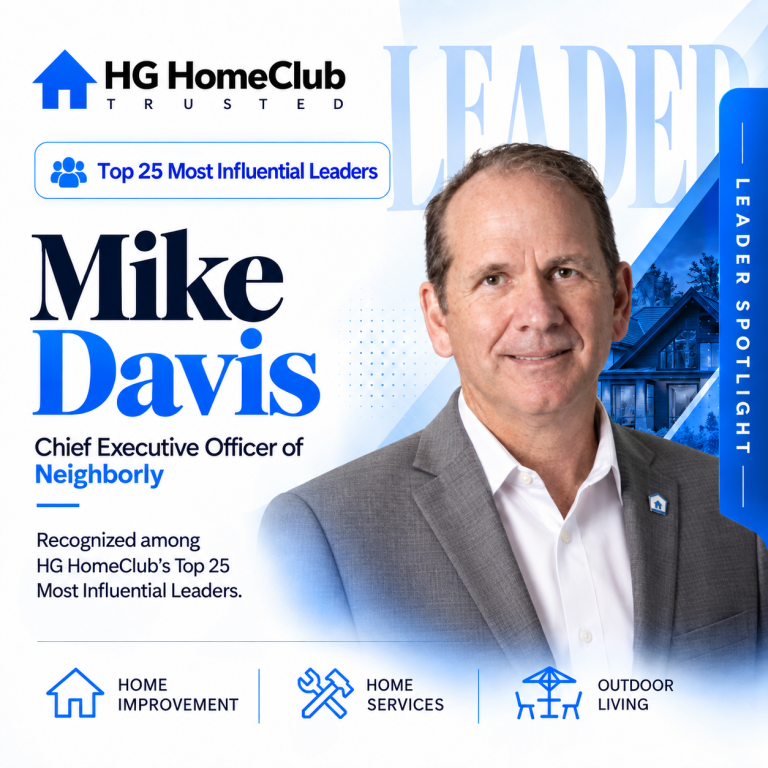
- Mike Davis — Chief Executive Officer, Neighborly (Franchising)
- Ted Decker — Chair, President and Chief Executive Officer, The Home Depot (Retail)
- Marvin R. Ellison — Chairman, President and Chief Executive Officer, Lowe’s (Retail)
- Aaron Erter — Chief Executive Officer, James Hardie (Manufacturing)
- Daniel Gluck — Founder and Chief Executive Officer, Renuity (Home improvement)
- Ken Goodrich — Chairman; Founder, Goettl; The Goodrich Organization (Home services)
- Brian Gottlieb — Best-Selling Author and Speaker, Beyond the Hammer (Speaking and authorship)
- Maggie Hardy — Owner, President and Chief Executive Officer, 84 Lumber (Distribution)
- Brad Jacobs — Chairman and Chief Executive Officer, QXO (Distribution)
- Kurt Kane — President and Chief Executive Officer, TruGreen (Outdoor living)
- Ara Mahdessian — Co-Founder and Chief Executive Officer, ServiceTitan (Technology)
- Matt Malone — Founder and Executive Chairman, Groundworks (Home services)
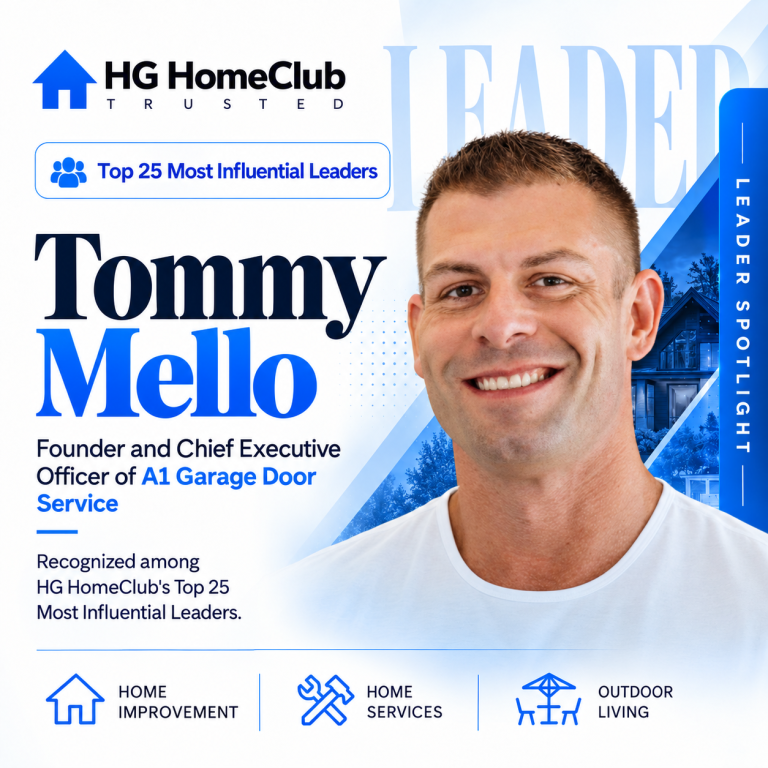
- Tommy Mello — Founder and Chief Executive Officer, A1 Garage Door Service (Home services)
- Heidi G. Petz — Chair, President and Chief Executive Officer, Sherwin-Williams (Manufacturing)
- Asher Raphael — Co-Chief Executive Officer, Power Home Remodeling (Home improvement)
- Dave Regnery — Chair and Chief Executive Officer, Trane Technologies (Manufacturing)
- Marcus Sheridan — Founder, Marcus Sheridan International (Speaking and authorship)
- Dan Tinker — President and Chief Executive Officer, SRS Distribution (Distribution)
- James W. Tobin III — President and Chief Executive Officer, National Association of Home Builders (Associations)
Frequently Asked Questions About Ted Decker, The Home Depot and This Recognition
- What is HG HomeClub, and what is this list?
HG HomeClub is a national media platform serving the home improvement, home services, and outdoor living industries. It was created to return media to its original purpose of informed transparency, curating the industry’s top stories, headlines, rankings, videos, podcasts, webinars, events and professional recommendations in one place for both homeowners and professionals. The 25 Most Influential Leaders in Home Improvement, Home Services and Outdoor Living is one of HG HomeClub‘s editorial rankings, recognizing the people shaping these industries in the right way across manufacturing, distribution, retail, technology, franchising, contracting, media, capital and the associations that convene the trades.
- Is the list ranked from one to 25?
No. The list is presented alphabetically and carries no numerical order. The leaders recognized exercise influence in genuinely different ways, through enterprise scale, growth, product innovation, franchising, capital, authorship, keynote stages, advocacy and media, and HG HomeClub declined to impose a hierarchy on work that is not comparable. Every leader on the list is recognized equally.
- Who is Ted Decker?
Ted Decker is chair, president, and chief executive officer of The Home Depot, the world’s largest home improvement retailer. He joined the company in 2000 as director of business valuation and held roles including senior vice president of strategic business development, senior vice president of retail finance, executive vice president of merchandising and chief merchant, and president and chief operating officer before becoming chief executive officer in 2022 and chair of the board that October. He holds a bachelor’s degree in English from The College of William & Mary and an MBA from the Tepper School of Business at Carnegie Mellon University.
- Why was Ted Decker selected for this list?
Because no other individual sits at the center of as much home improvement activity, and because of what he has chosen to do with that position. Under Decker, The Home Depot committed roughly $24 billion to acquiring SRS Distribution and GMS Inc., rebuilding the company as a genuine supplier to professional contractors rather than a retailer that also serves them. He has driven an interconnected shopping experience that changed how both homeowners and professionals research and buy projects, funded the training of the next generation of tradespeople through Path to Pro, and required every corporate associate, himself included, to work a store shift each quarter.
- How big is The Home Depot under his leadership?
The Home Depot operates more than 2,360 retail stores plus more than 1,280 SRS Distribution locations, employs more than 470,000 associates, and reported fiscal 2025 sales of $164.7 billion. Sales in the first half of fiscal 2026 reached $89.6 billion, up 5.3 percent year over year, including $47.9 billion in the second quarter. The company describes a total addressable market of approximately $1.2 trillion, with the professional customer opportunity alone at roughly $700 billion.
- What did the SRS Distribution and GMS acquisitions change for contractors?
They turned a retail network into a trade distribution network. SRS Distribution, acquired for a total enterprise value of approximately $18.25 billion, brought branch-level roofing, landscaping and pool distribution with a delivery fleet built for jobsites. GMS Inc., acquired through SRS Distribution for approximately $5.5 billion, added drywall, ceilings and steel framing. Combined with the stores, the Pro ecosystem now spans more than 2,360 stores, 1,300 branches, 325 customer-facing warehouses and approximately 16,000 delivery assets, letting a contractor source and schedule a complex job through a single supplier, with trade credit and jobsite delivery.
- What is the frontline connectivity policy, and why does it matter?
It is a requirement Decker instituted in 2024 that every corporate associate at The Home Depot, including senior executives and remote employees, work a full eight-hour retail shift in a store once per quarter. It matters because it structurally corrects the distance between decision-makers and customers, a problem every large organization in home improvement and home services faces as it scales. It has since been cited well beyond the industry as a model for grounding corporate strategy in frontline reality.
- What has The Home Depot done for the skilled trades and for communities?
The Home Depot Foundation surpassed $1 billion in total charitable giving in 2026. It has pledged $50 million by 2028 to train the next generation of tradespeople through Path to Pro, which has already introduced hundreds of thousands of people to careers in the trades and awarded scholarships to students entering trade colleges nationwide. Since 2011 the Foundation has invested more than $650 million in veteran causes and improved more than 70,000 veteran homes and facilities, against a $750 million pledge by 2030. Team Depot, the associate volunteer force, has completed 27,000 projects since 2011, and The Homer Fund has provided nearly $300 million to more than 200,000 associate families. In 2026 the Foundation committed more than $5.5 million toward disaster preparedness and mitigation.
- How does Ted Decker’s influence reach outdoor living?
Two ways. The Home Depot is the country’s largest seller of lawn and garden goods, and its garden centers effectively set the seasonal cadence of the residential landscape market — when live goods, mulch, hardscape, irrigation, mowers, grills and patio furniture reach homeowners, at what price and in what volume. On the professional side, the SRS Distribution acquisition brought landscape and pool distribution directly into the company, placing it in branch-level competition for the landscape and pool contractors served by specialists such as SiteOne Landscape Supply.